
Third-Party Funded Research Projects
in chronological order (most recent first)
Persianate Jews: Mobility, Community, Memory
Project team: Ariane Sadjed (PI, Institute of Iranian Studies, Austrian Academy of Sciences)
Funding: ERC European Research Council (Project number: 101125017 — PersCom)
Who are Persian Jews and what can we learn from their history? Looking back on a history of almost 3000 years, the majority of Jews left the Persianate world from the mid-20th century onwards. As Jews who lived in Muslim cultures, their trajectories do not fit into mutually exclusive concepts of “Jews” and “Muslims”.
However, we hardly know how interactions between Muslims and Jews worked on a daily basis. Contemporary narratives about Jewish-Muslim relations tend to be highly polarized, and access to sources in Persianate societies is hampered. Based on different forms of interconnectedness, the project PersCom aims to provide a comprehensive study about Jews from Iran, Central Asia and Afghanistan, from the 19th century until today. It analyses Jewish contacts within and outside of these communities in everyday life, to shed light on the various forms of connection with and separation from the surrounding societies.
The research highlights religious identity as applied in context, rather than as fixed and static notion. Methodologically this will be achieved by combining a variety of sources that have not been brought into dialogue until now, including the different languages Persianate Jews used. Focusing on non-elites and everyday life also includes a completely new pool of data that until now was considered too mundane for analysis. Yet, exactly these documents from „ordinary“ people and daily encounters provide significant new insights into Jewish life in the region and the role of local and transregional networks.
In this way, PersCom aims to overcome the geographic, disciplinary and linguistic separation that has shaped modern Persian Jewish history to date. Working in a number of different public and private archives and extensive interview research in many locales where Persian Jewish communities lived and live today will generate new insights into Jewish life in a region is often considered exotic or at least remote – yet not only places such as Mashhad, Herat, or Bukhara, but also the frontier regions and smaller villages of the respective countries were home to many different Jewish communities. PersCom contributes to preserving this endangered heritage, which is of relevance both to Jewish history as well as to the history of Persianate societies.
Project duration: 10/2024 – 09/2029
Writing Against the Law: A Socio-Literary History of Ottoman-Armenian Print Culture (1857 – 1914)
Principal Investigator: Nanor Kebranian (University of Vienna)
Funding: FWF (Grant Doi 10.55776/PAT1309125)
Censorship is the cornerstone of all autocracies. The multiethnic and multireligious Ottoman Empire was no exception. As 19th century ideas of democratic governance and civic equality took hold in the state’s multilingual press and publications, the ruling elites felt threatened by public scrutiny. They responded by imposing increasingly harsher regulations to shield themselves from open criticism and dissent. Presses could be shut down, and publishers, editors, and writers could receive hefty fines or even prison sentences for statements deemed offensive to the state. While these pressures silenced some segments of society, many others found ways to articulate grievances or propagate democratic values without inviting the state’s hostility. The more stringent these regulations became, the more inventively the agents of print culture responded in their use of language, meaning, and context to resist oppressive policies. In so doing, they ensured the social and moral continuity of egalitarian principles in public consciousness. Their efforts and achievements have unfortunately been overlooked by histories of this period, mainly because their tactics are difficult to detect in superficial readings without the requisite sensitivity to deeper contexts. This project strives to correct that oversight by revealing the untold story of how a broad spectrum of cultural actors - from editors and writers to translators and performers - employed literary narratives to build social cohesion and resist tyranny.
As a case study, this four-year project (2025 - 2029) homes in on the work of Armenians in the Ottoman Empire - a segment of society that was condemned not only to genocidal elimination, but whose history has also been largely expunged or minimized in official histories of the Turkish state. Being Christians under Islamic rule, this population was treated as second-class subjects and hence, closely monitored and scrutinized. This project will examine how Armenians responded to such measures from the advent of print regulation (1857) until the onset of the First World War, by enquiring: How did they employ language, imagination, and rhetorical techniques towards political subversion? How did their social and political networks determine the types of narratives they produced? And how did they cultivate and disseminate such resistance beyond writing? A broad spectrum of sources held in various countries - such as Armenia, Turkey, and Austria - will be closely analyzed in order to provide a full response to these queries. The findings are expected to uncover and present previously unknown or unacknowledged works; to shed light on undetected literary processes; and to present the indispensable roles of differing parties, be they civil society leaders, imperial functionaries, or the censors themselves.
Project duration: 01/2025 – 07/2029
Inscribing Authority: Islamic Rule in Central Asia (10th-13th Centuries) as Reflected in Monumental Epigraphy
Project team: Viola Allegranzi (Institute of Iranian Studies, Austrian Academy of Sciences)
Funding: FWF (Project number: ESPRIT-Project ESP 512-G)
From the 9th-10th centuries, Muslim dynasties of Iranian or Turkic origins established self- governed emirates and sultanates in the eastern regions of the Abbasid caliphate. The extensive loss of manuscript sources and material remains leaves open many questions about the ruling lines and local elites, their spheres of influence and interactions, and the circulation of political discourses, religious currents, literary and artistic trends. Only a connected view of the preserved texts, architectural complexes, and artistic products can provide a better understanding of the political and cultural history of the eastern Islamic lands, marked by the encounter of Arabo-Islamic models with local traditions and features imported from neighbouring areas of Eurasia.
The project proposes the first comprehensive study of architectural inscriptions dating from the 10th-13th centuries, recorded in an area encompassing present-day Afghanistan and the Central Asian republics (Kazakhstan, Kyrgyzstan, Tajikistan, Turkmenistan, and Uzbekistan). Varying in materials and writing styles, these epigraphic sources present historical, religious, poetic texts composed in Arabic or Persian. Many of them remain unstudied. Others have been studied in isolation, without proper consideration of their architectural and socio-historical environment. The project aims to reappraise the dual nature of inscriptions as texts and artefacts, to define their context of production and reception, and to draw connections with manuscripts, coins, and material culture. Such an investigation promises to shed light on the textual and visual communication strategies that shaped Islamic rule, enabling temporal and religious authorities to appropriate space and gain recognition from local communities.
The data collected through fieldwork and archival search will be compiled in an open access online database, gathering texts and descriptions of the inscriptions, photographs, graphic reconstructions, and available contextual information. The use of digital tools has multiple objectives: systematising data and facilitating comparative analysis; mapping inscriptions and establishing connections with monuments and historical figures (patrons, craftsmen, authors).
Furthermore, making available a collection of little-known primary sources will fuel interdisciplinary research in the fields of Islamic and Eurasian studies.
The project also participates in the preservation and enhancement of endangered cultural heritage, since several of the monuments surveyed are threatened with ruin or improvident restorations, which make it urgent to collect photos and transcripts of the inscriptions and to raise awareness about their paramount historical and artistic value.
Project duration: 02/2025 – 02/2028
Nomads' Manuscripts Landscape: Investigating Literary Evidence for Transculturation in Medieval Iran and Central Asia (13th – 15th centuries)
Project team (Institute of Iranian Studies, Austrian Academy of Sciences): Dr. Bruno De Nicola (PI), Stefan Kamola, Sara Mirahmadi
Funding: FWF (Project number: START Project Y-1232-G30)
The rise of Chinggis Khan (d. 1227) and the expansion of his empire to western Eurasia in the 13th century dramatically changed the history of the Islamic World. The general view of the Mongol (and then Timurid) conquest of Central Asia and Iran is that of an unstoppable horde of nomadic warriors that put an end to the golden age of Islamic civilisation. However, the influx of nomadic people into the Islamic regions brought with it an unprecedented burst of cultural activity attested in the extensive amount of Islamic manuscripts that survived from the period. These two phenomena illustrate a contradiction in which illiterate and barbarian conquerors simultaneously destroyed a learned civilisation and triggered a booming cultural environment in the lands they conquered. To make sense of this paradox, it has often been assumed that these nomadic conquerors ‘ruled from horses’, enjoying the rewards of military success and leaving the day-to-day administration of their territories to native bureaucrats. In this view, nomads and their sedentary subjects lived in a mutually beneficial but culturally separated social arrangement. Based on some preliminary research this project aims to prove that rather than discrete exchanges, nomadic rulers closely interacted with sedentary elites to a point in which a process of transculturation occurred between the conqueror and conquered cultures. The scope of the project will be limited to the study of the territories ruled by nomads between the 13th and the first half of the 15th century in present day Iran and Central Asia. We will argue that both actors created a cohesive culture in which nomads and their sedentary subjects were equally involved in financing, producing and distributing knowledge in the region. We will prove this hypothesis by exploring not only traditional sources but implementing a novel methodology based on the analysis and interpretation of data obtained from codicological information contained in surviving Islamic manuscripts produced in this period. The codices (manuscripts) of the period that have come to our day remain largely unstudied, still holding unique information that can bring new evidence to the little understood process of transculturation between nomadic and sedentary people in this historical period. To facilitate access to an extensive amount of new information from these little studies codices, the project will commit to the develop of two digital endeavours. They will help to systematise the data for the project and provide online access to the information gathered to other researchers and the general public. An independent Analytical Database of Islamic manuscripts and the IARN (Inner Asia Research Network) will be publicly accessible and will serve as reference research tools for wider research on Islamic and Eurasian studies.
www.oeaw.ac.at/iran/nomansland
Project duration: 01/2020 – 07/2027
A Tale of Pots and People: An Unwritten Material History of Everyday Life in the Bukhara Oasis During the Long First Millennium
Project team: Jacopo Bruno (Institute for Iranian Studies, Austrian Academy of Sciences)
Funding: FWF (Project number: ESPRIT-Project ESP 422-G)
The project’s objective is to elucidate the dynamics that shaped the Bukhara Oasis in the pre-Islamic era, spanning the period from the 4th/3rd century BCE to the 8th century CE. The Bukhara Oasis constitutes a unique and inestimable case study of an oasis system developed in historical times (post-4th century BCE) when the former swampy area progressively dried out leaving this space for cultivable lands in the oasis. Its development can be followed through all these centuries when the oasis progressively became one of the major hubs within the Silk Roads network and an important regional polity in the area. Therefore, the Bukhara Oasis is a key cross-section for the long first millennium through which the research will analyse the development of a Central Asian oasis system and disentangle the interwoven influences of long-term interactions between the dynamics of the neighbouring empires or political formations and the local and regional dynamics of the oasis, node of the broader network of the Silk Roads. Lastly, it is in this context that we are able to understand the human response to these political, cultural, and socio-economic dynamics, and how these entanglements have contributed to shape the material worlds of the local communities.
However, its early phases, before the oasis was integrated into the late Umayyad and early Abbasid caliphates between the 8th and 9th centuries CE, are poorly documented. The latter consist mostly of sources from outside Central Asia that refer to neighbouring empires and regional political formations, and completely overlook the Bukhara Oasis, its population, and the political, social, cultural, and economic dynamics of a given period. The gradual emergence of Bukhara as a historical landscape since the 4th/3rd centuries BCE and its history must be based on the evidence of material culture.
This data-driven project aims to get insight into the everyday life of the oasis inhabitants, the agencies of the everyday objects in the practices of ordinary people, and how these entanglements between humans and things were affected by the major Central Asian dynamics and historical events. With an analytical approach that incorporates an archaeological-historical perspective, this study will ultimately provide a long-term ‘material history’ of everyday life in the oasis that looks behind and beyond conventional historical accounts. To achieve these results, the research will focus on ceramics as an excellent material marker, abundantly found in archaeological excavations, analysing this dataset within its assemblages and archaeological contexts. The data derives from the unpublished assemblages found during the activities of the “Mission Archéologique Franco-Ouzbèke dans l'Oasis de Boukhara of the Musée du Louvre” (MAFOUB) alongside a comparative study of the archaeological literature and will be examined using the research tools developed in the current material culture studies and archaeological theories.
Project duration: 07/2024 – 06/2027

DANFront: An Environmental History of the Early-Modern Ottoman Military Frontier in the Middle and Lower Danube
Project team: Onur İnal (PI, University of Vienna), Deniz Armağan Akto (Prae-Doc/Project assistant, University of Vienna)
Funding: FWF (Project number: PAT2459324)
DANFront investigates the role of the Danube in the military expansion of the Ottomans into Europe in the 16th and 17th centuries and its impact on the river landscape. The project aims to uncover how the Ottomans used the Danube for their military and socio-economic needs in order to expand their influence in South-Eastern and Central Europe. The project consists of two separate but overlapping focal points. The first deals with the Ottoman military organisation along the Danube and its impact on the environment. The second focus examines the ecological challenges posed by the Danube and the measures, institutions and strategies developed by the Ottomans to overcome these challenges. As part of the project, historical data is extracted from various Ottoman sources, and data sets are created and visually represented.
Project duration: 07/2024 – 06/2027

Die Verflechtung Anatoliens durch Dokumente (1300-1600, ENCHANT)
Project team: Johannes Preiser-Kapeller (PI, Austrian Academy of Sciences), András Barati (Austrian Academy of Sciences), Samvel L. Grigoryan (UCLA Los Angeles), Ekaterini Mitsiou (Projektmitarbeiterin, University of Vienna), Rustam Shukurov (Austrian Academy of Sciences), Angeliki Kolovou (University of Vienna)
Funding: FWF (Project number: P 36403-G)
Das 13. Jahrhundert war eine Zeit dramatischer Veränderungen für die Gesellschaften Anatoliens und des östlichen Mittelmeerraums. Die Eroberung von Konstantinopel durch den 4. Kreuzzug (1204), die mongolischen Eroberungen des seldschukischen Sultanats (1243) und Bagdads (1258) oder auch die Machtergreifung der Mamluken in Ägypten (1250) erschütterten soziale und politische Strukturen. Während Aspekte dieser Entwicklungen bereits erforscht wurden, fehlt ein systematischer Vergleich, wie die Staatswesen Anatoliens versuchten, Netzwerke der Macht im Rahmen ihrer Wahrnehmung der Weltordnung neu aufzubauen.
Das vom österreichischen FWF für die Jahre 2023-2026 geförderte Projekt ENCHANT ("Entangled Charters of Anatolia") liefert die Grundlagen für einen solchen Vergleich durch die Erfassung und Untersuchung der wichtigsten Artefakte dieser Bemühungen um den Erhalt staatlichen und sozialen Zusammenhalts, nämlich der von den Kanzleien der byzantinischen „Exilreiche“ Nikaia und Trapezunt, des armenischen Königreichs in Kilikien und des seldschukischen Sultanats ausgestellten Urkunden. Das Projekt erarbeitet eine digitale Datenbank, ein Korpus jener Dokumente, deren Texte zumindest in wesentlichen Teilen überliefert sind, und eine Reihe von Publikationen, die eine vergleichende Analyse dieser vielfältigen Akte der „Welt(neu)ordnung“ in Zeiten schwerer Krise präsentieren.
Project duration: 01/2023 – 12/2026

The Ottoman Grand Vizierate 1560s to 1760s (GraViz)
Project team (Institute for Habsburg and Balkan Studies, Austrian Academy of Science): Yasir Yilmaz (PI), Nilab Saeedi, Michael Vogelsberger
Funding: FWF (Project number: P 36216)
GraViz is a three-year project funded by the FWF (P 36216), developed to explore the Ottoman office of the grand vizier and its institutional evolution during the early modern period, roughly from the 1560s to 1760s, with a special focus on the office’s role in handling European diplomacy. Focusing on the tenures of six grand viziers, Sokollu Mehmed Pasha (1565-1579), Köprülü Mehmed Pasha (1656-1661), Köprülü Ahmed Pasha (1661-1676), Kara Mustafa Pasha (1676-1683), Nevşehirli (Damad) Ibrahim Pasha (1718-1730), and Koca Ragıb Pasha (1757-1763), GraViz will primarily explore the importance and centrality of the office of the grand vizier in maintaining diplomatic relations. Using the documentary evidence of the grand vizierial diplomatic correspondence with the Habsburg court, which is preserved in the archives in Istanbul and Vienna in original and copied forms, we will particularly examine the transformations in the office’s handling of diplomatic communication from the 1550s to 1760s. Can we trace in the textual evidence of international correspondence the changes that the office of the grand vizier and the Habsburg-Ottoman relations underwent from the mid-sixteenth to the mid-eighteenth century? Would a comparative dissection of the language, jargon, vocabulary, and other stylistic elements in the grand vizierial correspondence with the Viennese court from the sixteenth, seventeenth, and eighteenth centuries unveil new insights into the modifications the empire and the grand vizierate went through? GraViz will seek answers to the above questions through rigorous scrutiny, digital transcription and translation into English, and annotation of the grand vizierial correspondence.
All digital editions of the GraViz project will be published open access on the QhoD webpage.
Project duration: 09/2023 - 08/2026
The Jewish Triangle: Connections and Disruptions in Persianate-Jewish Life
Project team (Institue of Iranian Studies, Austrian Academy of Sciences): Dr. Ariane Sadjed (PI), Ibrahim Shafiei
Funding: FWF (Project number: I 6420-G)
For centuries, Persian speaking Jews lived in today’s Iran, Central Asia and Afghanistan. Dominated by competing Muslim empires, Jewish communities remained connected through traditional trade routes that facilitated the exchange and mobility of people, goods and ideas within and beyond what has been conceptualized as the Persianate sphere. In the age of colonialism and with the creation of nation states, these traditional networks became disrupted and dissolved while new, divisive and disconnected ideas of community and belonging emerged.
The proposed research uses the concept of the “Persianate” as a framework to grasp the entangled Jewish histories in the late 19th and early 20th centuries, beyond nationalized narratives. Tracing the interconnections and divisions in Persianate Jewish life in Iran, Central Asia and Afghanistan will elucidate the diversity within these communities, and provide a better understanding of Persianate societies through the prism of Jewish history.
Project duration: 07/2023 – 06/2026
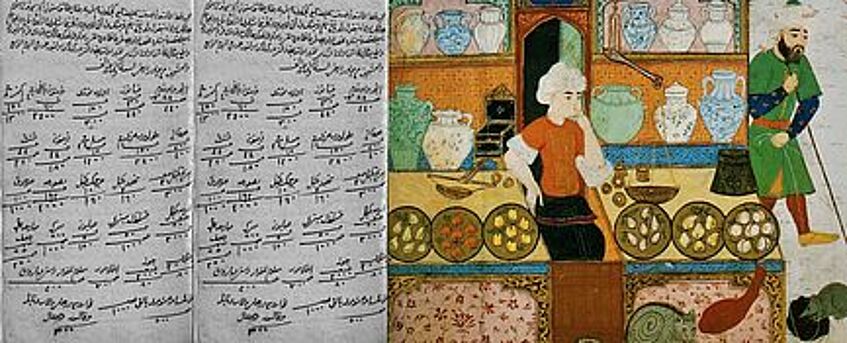
Grocers of Istanbul: Tracing food consumption (GrocerIst)
Project team: Yavuz Köse (PI, University of Vienna), Sümeyye Hoşgör Büke (Postdoc, University of Vienna), Peter Andorfer (ACDH-CH, Austrian Academy of Sciences)
Funding: FWF (Project number: P 35546)
Die meisten Studien zum Lebensmittelkonsum in der Geschichtsschreibung zum Osmanischen Reich beschränken sich auf das Leben der Palastbewohner und der herrschenden Elite, indem sie vor allem die Anpassung an die westlichen Tischsitten und die Veränderungen der Gerichte untersuchen. Aufgrund des Mangels an Archivmaterial ist der Lebensmittelkonsum der einfachen Stadtbewohner im Osmanischen Reich ein weniger erforschtes Thema geblieben. GrocerIST will diese Lücke in der Literatur schließen, indem es bisher ungenutzte Quellen zum Verständnis des Lebensmittelkonsums osmanischer städtischer Haushalte vorstellt. Das Hauptziel von GrocerIST besteht darin, die Lebensmittelkonsummuster der Einwohner Istanbuls im 18. und 19. Jahrhundert anhand der Nachlassinventare der Lebensmittelhändler (bakkal) aufzuzeigen und zu analysieren. Durch Vergleiche zwischen den Jahrhunderten und den verschiedenen sozioökonomischen Bedingungen der Stadt soll der Lebensmittelkonsum der Osmanen im Kontext der internen und externen politischen sowie sozioökonomischen Umstände des Reiches diskutiert werden. Um eine große Menge an Archivmaterial systematisch analysieren zu können, wird GrocerIST von Tool der Digital Humanities (DH) profitieren. Durch die Generierung von Datensätzen und die Erstellung interaktiver Karten wird das Projekt in der Lage sein, fundierte Vergleiche über die Jahrhunderte und für verschiedene Orte anzustellen. Es wird erwartet, dass die Projektmitarbeiter*innen auf diese Weise genauere Schlüsse über den Lebensmittelkonsum der Osmanen ziehen können. Die Inventare der Lebensmittelhändler stellen eine wertvolle Quelle dar, die es den Forschern ermöglichen wird, den Wandel der Konsummuster der Stadtbevölkerung in den verschiedenen Bezirken der Hauptstadt zu ergründen. Das Projekt wird zum ersten Mal einen Datensatz von Verbrauchsgütern/Lebensmitteln liefern und diese auf einer interaktiven Karte von Istanbul verorten. Durch die Einbeziehung zusätzlicher Quellen wie osmanische Zeitungen, Zeitschriften und Reiseberichte wird GrocerIST auch die Übergangszeit vom 18. zum 19. Jahrhundert und deren Auswirkungen auf das Konsumverhalten zugänglich machen. Auf diese Weise wird das Projekt den Wandel nachzeichnen, dem die Lebensmittelhändler und ihre Produktpalette ausgesetzt waren.
Project duration: 07/2022 – 03/2026

Digitisation of the Armeno-Turkish Collections of the Mekhitarist Congregation in Vienna
Project team: Yavuz Köse (University of Vienna)
Funding: Stadt Wien
The project's objective is to meticulously catalogue and digitise the distinctive corpus of Armeno-Turkish texts, specifically referring to Turkish media written in Armenian script, from the nineteenth and early twentieth centuries in the library of the Vienna Mechitarist Congregation for the first time and ensure their enduring accessibility to a broader audience.
The digitised Armeno-Turkish texts (mainly prints and newspapers) will be transcribed from Armenian script into Latin script using the AI-supported platform Transkribus. This will facilitate greater accessibility and comprehension of this cultural heritage.
The project thus has several objectives. 1) It is dedicated in an innovative way to an Armeno-Turkish corpus that, despite its historical significance, has long been unrecognised; 2) The integration of these texts and findings into academic research and teaching will promote a more comprehensive and multi-layered understanding of Ottoman history and Ottoman cultural heritage in Vienna; 3) The long-term goal of the project is to promote a paradigm shift in Turkish studies and to move away from narrow nationalist approaches. This shift is crucial for a more comprehensive and inclusive account of the complex history of the Ottoman Empire.
Finally, the project aims to present the Mechitarist Congregation, which has been based in Vienna since 1811, as a place where the history of the Armenians, the Habsburg and Ottoman Empires converge in many ways, thus contributing to the cultural heritage of Vienna.
Duration: 2023 –

Ottoman Nature in Travelogues, 1501–1850: A Digital Analysis (ONiT)
Project team (Institute for Habsburg and Balkan Studies, Austrian Academy of Sciences): Arno Strohmeyer (PI), Doris Gruber, Jacopo Jandl, Michael Seidl, Michela Vignoli, Güllü Yıldız
Funding: FWF (Project number: P 35245). The Visual Geometry Group (VGG) at the University of Oxford and the Portapp project at the Herzog August Library in Wolfenbüttel act as cooperation partners
This interdisciplinary Digital Humanities project analyzes Ottoman “nature” (flora, fauna, landscapes) in travelogues on the Ottoman empire, printed between 1501 and 1850. The leading questions are what role representations of nature played in the reports, whether and, if so, why differences occurred in diachronic and synchronic perspectives and how the texts and images related to each other. This analysis aims to shed new light on transnational environmental and natural history.
ONiT started in 2022 and will last until 2025. Historians, Ottomanists, Computer and Library Scientists from the Institute for Habsburg and Balkan Studies (IHB) of the Austrian Academy of Sciences (ÖAW), the Austrian Institute of Technology (AIT), the Austrian National Library (ÖNB) in Vienna, the Paris Lodron University of Salzburg, and the Marmara University in Istanbul work closely together. The project team creates a multilingual corpus (German, English, French, and Latin) of around 2,000 travel reports and a smaller sub-corpus of Arabic, Ottoman, and Persian accounts. The focus is on the holdings of the Austrian National Library, which are supplemented by collections from other institutions around the world.
The project team develops an innovative workflow for the extraction and analysis of texts and images. ONiT is the first project to analyze Ottoman “nature” in a large corpus of travelogues, systematically collecting and classifying related texts, images, and maps and analyzing their relationship to one another using novel tools, some of which use machine learning. We hereby build on the results of our previous Travelogues-project. Digital documents, computer-generated data, and digital tools created as part of the project will be made freely accessible. ONiT is also looking for new ways to integrate the project’s results into the information systems of the ÖNB.
https://www.oeaw.ac.at/en/ihb/research-units/digital-historiography-and-editions/research/onit
Project duration: 07/2022 – 12/2025
Rethinking history: authorial process in Mongol Iran
Project team: Stefan Kamola (Institute of Iranian Studies, Austrian Academy of Sciences)
Funding: FWF (Project number: Lise-Meitner Projekt M 3187-G)
“Rethinking history” engages the field of Mongol-era cultural history by revealing changing ideas about the Mongols among Persian historians. It adds to scholarship on Persian historiography through original research into texts from a pivotal moment in the development of that genre. Through its innovative use of unique manuscripts of historical texts, it expands the field of manuscript studies. It capitalizes on the subjective nature of historical chronicles to understand how individual authors’ perceptions of Mongol sovereignty changed over time.The post-modern recognition that texts reflect their authors’ political and mental circumstances has allowed historians to use discrepancies between sources to compare their authors’ personal perspectives. However, studies of individual works too often assume the existence of a single original text. It is hypothesized that variants of a text found in surviving manuscript copies might offer insight into the author’s evolving thoughts about the role of the Mongols in history. This project examines three historical chronicles where variations were introduced in the period immediately after they were first written to track the gradual acculturation of the Mongols through the works written by their Persian subjects.
For each of the texts chosen for study, manuscript copies will be compared to determine the significance and order of their variants. A system for tracking variants across manuscripts and sorting these into a schema of textual change over time was developed in a previous study of a separate historical chronicle. The methods developed ad hoc for that project can be refined and applied systematically across texts, allowing them to be integrated into a general study of authorial process in Mongol Iran.
This project allows individual texts to illustrate historical change over time. Modern scholarship is premised on the stability of print publication. However, textual instability is a factor of any non-print culture, including pre-modern Persian historical writing. Rather than try to eliminate that instability, this project highlights it to advance our understanding of the author and his surroundings.
Project duration: 08/2022 – 07/2025
The Book of Jāmāsp the Sage
Project team (Institute of Iranian Studies, Austrian Academy of Sciences): Bruno De Nicola, Shervin Farridnejad, Stefan Kamola, Majid Montazer-Mahdi, Florence Somer, Sarah Savant
Funding: FWF, Austrian Academy of Science
The Book of Jāmāsp the Sage (Kitāb-i Ḥakīm Jāmāsp) is a rendition of a popular Zoroastrian apocalyptic tradition, telling a history of the world from its creation to its end through a series of horoscopes. It was composed in the south of Iran during the third quarter of the thirteenth century, in response to the Mongol conquest of the region. Most other extant texts in the tradition, known generically as the Decrees of Jāmāsp (Aḥkām-i Jāmāsp), were prepared during the dissolution of the Great Seljuq Empire in the early twelfth century. Social changes in Iran in the intervening century are reflected in the way that the Decrees are updated for the Book of Jāmāsp the Sage. The text therefore provides unique insight into popular local intellectual culture during a dynamic period of Iranian history. It uncovers a perspective on history, religion, and science that was far removed from the Mongol court and its royally sponsored chronicles.
This project is the first ever study of the Book of Jāmāsp the Sage, based on a half dozen extant manuscripts. The goal is to elucidate the historical, intellectual, and social contexts—from Astrology to Zoroastrianism— for the text’s creation and to show how the text exemplifies the hybrid and syncretic cultural life of Mongol Iran. We are also preparing a full edition and translation of the text, with textual and historical commentary, which will be published in print and digital formats.
Project duration: 2022 – 12/2025

Louis, Herbert, Karte von Albanien, 1928
Sprachgeschichte der Ortsnamen Albaniens
Project team (Institute for Habsburg and Balkan Studies, Austrian Academy of Science): Dr. Joachim Matzinger (PI), Katsiaryna Ackermann, Nedim Zahirovic
Funding: FWF (Project number: P 33706)
Am 1. Januar 2021 begann das vom FWF für vier Jahre finanzierte Drittmittelprojekt „Sprachgeschichte der Ortsnamen Albaniens“. Ziel dieses Projektes ist die diachron-linguistische Analyse der auf dem Staatsgebiet Albaniens belegten Ortsnamen (Stadt- und Dorfnamen, d.h. Makrotoponyme) von der Antike bis zur Neuzeit. Dabei werden die besonderen geschichtlichen Hintergründe der Siedlungs- und Migrationsgeschichte des albanischen Raums berücksichtigt und ausgewertet. Dies betrifft u.a. die kontrovers diskutierte Fragestellung nach Autochthonie oder aber Zuwanderung der Albaner in ihr historisch dokumentiertes Siedlungsgebiet, die mit der Frage nach der Herkunft der Albaner und ihrer Sprache untrennbar verbunden ist, die geographisch hohe Zahl an unzweifelhaft slawischen Siedlungsnamen auf dem ganzen Gebiet Albaniens oder aber auch die Schaffung einer eigenen albanischen Toponomastik.
Da die albanische Sprache selbst erst ab der Mitte des 16. nachchristlichen Jahrhunderts literarisch dokumentiert ist und gerade für den Zeitraum zwischen dem Ausgang der Antike und dem 11. nachchristlichen Jahrhundert (- der Ersterwähnung der Albaner als eigenständig wahrgenommene Ethnie in byzantinischen Quellen -) für den albanischen Raum nur spärliche historische Quellen zur Verfügung stehen, stellen gerade die Ortsnamen aussagekräftige Informationen bereit, um die historischen Ereignisse dieser Perioden zu erhellen. Eine auf modernen historisch-linguistischen Methoden durchgeführte Analyse wird schließlich zeigen, welchen phonologischen Veränderungen die Ortsnamen Albaniens seit ihrer Erstbezeugung unterworfen wurden und wie diese phonologischen Veränderungen chronologisch und sprachlich einzuordnen sind. Auch wird diese erstmalig durchgeführte Gesamtuntersuchung der Ortsnamen Albaniens zeigen, welchen Sprachen diese Ortsnamen zuzuordnen sind (voralbanische, albanische, slawische, vlachische, türkische Ortsnamen) und wie sich ihre geographische Distribution darstellt. Am Ende dieses Projektes soll ein praktisches Handbuch der Ortsnamen Albaniens publiziert werden, in dem die Projektergebnisse dargelegt werden, in Begleitung dazu auch eine Webpräsenz mit einer virtuellen Landkarte. Dieses Projekt soll als Modell und Vorbild für die noch ausstehende diachron-linguistische Erforschung der Ortsnamen der anderen Staaten Südosteuropas dienen.
Project duration: 01/2021 – 04/2025