

Economies of Banditry in the Late Ottoman Empire

Economies of Banditry in the Late Ottoman Empire
Tolga U. Esmer, 2026
Oxford University Press, The Past and Present Book Series
This book showcases a novel, inter-disciplinary approach that utilises the history of emotions and moral geographies to understand inter-confessional enmity, inter-imperial competition and intrigue, as well as corruption and crime in empire. It provides a riveting microhistory of empire written about one criminal and his large network of collaborators, and utilises history as well as cultural, social, and linguistic anthropology to address an Ottoman dystopia in which gossip, slander, mistruth, corruption, extortion, getting away with crime, and mass violence reign supreme.
For more details, see: https://global.oup.com/academic/product/economies-of-banditry-in-the-late-ottoman-empire-9780192856456?cc=at&lang=en&
Architektur einer Austro-islamischen Kaderschmiede: Die Scheriatsrichterschule in Sarajevo (1886–1889)

Architektur einer Austro-islamischen Kaderschmiede: Die Scheriatsrichterschule in Sarajevo (1886–1889)
Maximilian Hartmuth, 2026
Leykam Verlag
Das Gebäude, in dem sich heute die Islamisch-Theologische Fakultät der Universität Sarajevo befindet, stellt neben dem bekannteren Alten Rathaus (Vijećnica) von Sarajevo ein Hauptwerk des sogenannten orientalisierenden Stils in Europa dar. Es wurde in der Frühzeit der österreichisch-ungarischen Verwaltung in Bosnien und der Herzegowina konzipiert und übersetzte ein politisches Mandat ins Medium der Architektur: In der als „Scheriatsrichterschule“ bezeichneten Einrichtung sollten möglichst kaisertreue öffentlich Bedienstete ausgebildet werden, um in Ehe-, Familien- und Erbangelegenheiten unter Musliminnen und Muslimen Recht zu sprechen. Die extrovertierte Architektur dieses introvertierten Hochschulbaus geht auf einen böhmischen Schüler des berühmten Ringstraßenarchitekten Theophil Hansen zurück und zitiert ein breit gefächertes 'islamisches' Kulturerbe zwischen Granada, Kairo und Istanbul. Die vorliegende Arbeit präsentiert erstmals eine detaillierte Rekonstruktion der Planungen und Gestaltungsentscheidungen, die diesem Schlüsselwerk europäisch-muslimischer Architekturgeschichte zugrunde liegen, sowie eine professionelle Bilddokumentation.
Tous ces consuls de bazard. French Consulates and Greek Staff in the Aegean, 17th–18th Centuries

Tous ces consuls de bazard. French Consulates and Greek Staff in the Aegean, 17th–18th Centuries
Mathieu Grenet
Gunnar Hering Lectures, Vol. 5, edited by Maria A. Stassinopoulou, Angelika Hudler, Anna Ransmayr, Konstantinos Sampanis
V&R press
Long overshadowed by ambassadors and other high-ranking diplomats, consuls are now gaining attention for their role in early modern trade, the life of merchant communities settled abroad, and the rise of state institutions and control. France is a case in point, as Greek Ottoman subjects would often serve as French consuls in some of the more remote consular posts in the Eastern Mediterranean. This book explores their motives and careers, as well as France’s interest in relying on these peculiar agents. At a time when consular services became part of a complex process of definition of state sovereignty, the way their multiple, allegedly exclusive loyalties were articulated, sheds new light on issues of ‘foreign’ and ‘national’ in the making of early modern political identities.
Diyâr 7.1 released!

Diyâr 7.1 released!
Caricatures as a Sphere of Communication in the Late- and Post-Ottoman Context
Special issue editors: Veruschka Wagner (University of Heidelberg), Anna Kollatz (University of Heidelberg)
This thematic edition zooms in on caricatures as a source to gain insights into various aspects of public and private life, discourses and stereotypical framing. To examine caricatures from the late Ottoman and post-Ottoman contexts from different angles, both as outcomes and as drivers of social discourses, this special issue contains five contributions. The individual contributions, written by people from different disciplines and at different stages of their careers, cover a period beginning in the 1850s, moving through the first decade of the 20th century, and ending in the 1920s and 1930s. The contributions bring together not only sources in different languages but also different disciplines from which the contributors come: Sociology, Philosophy, Ottoman Studies, Translation Studies, Middle Eastern Studies, and Arabic and Islamic Studies. This special issue therefore offers a transdisciplinary and transcultural approach that emphasises the importance of caricatures, which are often perceived as less important than other written sources and are therefore still neglected in research.
All previous (and future) issues of Diyâr are fully open access!
If you would like to submit an article, you can find more information here: https://www.nomos.de/en/journals/diyar/
Istanbul 1914–1922. The Greeks of the City among Shortage, Hope and Collapse

Istanbul 1914–1922. The Greeks of the City among Shortage, Hope and Collapse
Méropi Anastassiadou, 2026
Gunnar Hering Lectures, Vol. 4, edited by Maria A. Stassinopoulou, Angelika Hudler, Anna Ransmayr, Konstantinos Sampanis
V&R press
Istanbul’s population greatly suffered during WWI. Sanitary problems, pauperization, mortality rise deteriorated everyday life. The flows of refugees and military mobilization were major issues. Paradoxically, its Greek orthodox community increased in 1914–1918. After the Mudros Armistice (October 1918), it could hope for the Ottoman Empire’s dismemberment and the return of Constantinople to the Greek fold. The events that followed and led to the birth of the Republic of Turkey would put an end to their expectations. The deterioration of everyday material life, the loyalty of Istanbul Greeks to the Ottoman State in wartime, ordinary people’s position towards Hellenic irredentism are the main themes explored through the archives of Greek Orthodox parishes of the city and those of the Ecumenical Patriarchate of Constantinople.
Writing History in Ottoman Europe (Fifteenth – Eighteenth Centuries)

Writing History in Ottoman Europe (Fifteenth – Eighteenth Centuries)
edited by Ovidiu Olar and Konrad Petrovszky, 2026
Brill
The various forms of history writing of Early Modern Ottoman Europe were never the object of a comprehensive or comparative approach. The aim of the present volume is to fill in this major gap. Leading specialists in the field, many of them being Brill authors, have joined forces in an attempt to reflect the diversity of history writing in the Ottoman Empire, in its European part.
For more details: https://brill.com/display/title/72167
2025
Sociocultural Aspects of Greek-Turkish Language Contact(s)

Sociocultural Aspects of Greek-Turkish Language Contact(s)
Konstantinos Sampanis, Matthias Kappler, Eleni Karantzola (eds.), 2025
with the editorial assistance of Dilara Kaplan
Harrassowitz
This anthology examines the complex sociolinguistic conditions of language contact between speakers of Greek and Turkish. Adopting a diachronic perspective and in a geographical area ranging from Anatolia to Istanbul and the Aegean, Sociocultural Aspects of Greek-Turkish Language Contact(s) explores the cultural, ideological, and political factors that have significantly influenced the grammatical and lexical interplay between the two languages. The contributions address a fascinating array of topics, including the Inner Asia Minor dialects spoken in Cappadocia and Central Anatolia, the Turkish-speaking Orthodox population of Anatolia, Ottoman grammars authored by Greeks, the Istanbul Greek lexicon in both Ottoman and modern contexts, the Pontic dialect still spoken in Turkey’s Black Sea region, as well as the contemporary Turkish variety spoken on the island of Rhodes. This broad scope provides a comprehensive view of Greek-Turkish language contacts as a dynamic process shaped by historical transformations, social developments and rich cultural exchange.
For more details, see: https://www.harrassowitz-verlag.de/Sociocultural_Aspects_of_Greek-Turkish_Language_Contact%28s%29/title_9124.ahtml
THE GENTLE, FOLKSY LOVE POEMS OF VĀLIHĪ-YI BELĠRĀDĪ, AN OTTOMAN POET OF THE 16th CENTURY

THE GENTLE, FOLKSY LOVE POEMS OF VĀLIHĪ-YI BELĠRĀDĪ, AN OTTOMAN POET OF THE 16th CENTURY
Ed. Edith Gülçin Ambros, Ali Emre Özyıldırım, and Jan Schmidt †, 2025
The Isis Press
I. Introduction
1. Jan Schmidt’s paper “An Edition of the Dīvān of Vālihī”
a. The text
b. The poet
c. The edition and Ottoman literary history
2. The dīvān’s linguistic, stylistic, and thematic characteristics
a. Simplicity of diction and familiarity of tone
b. Thematic aspects
c. Archaisms, irregularities, and originality
3. Vālihī’s identity.
II. Bibliography
III. The edition of the dīvān
IV. Indices
1. Index of personal and geographical names
2. Index of idiomatic expressions and proverbs.
For more details: https://www.theisispress.org/b1480-the-gentle-folksy-love-poems-of-v-lih-yi-bel-r-d-an-ottoman-poet-of-the-16th-century.html
Gateway to the Mediterranean: An Environmental History of Late Ottoman Izmir
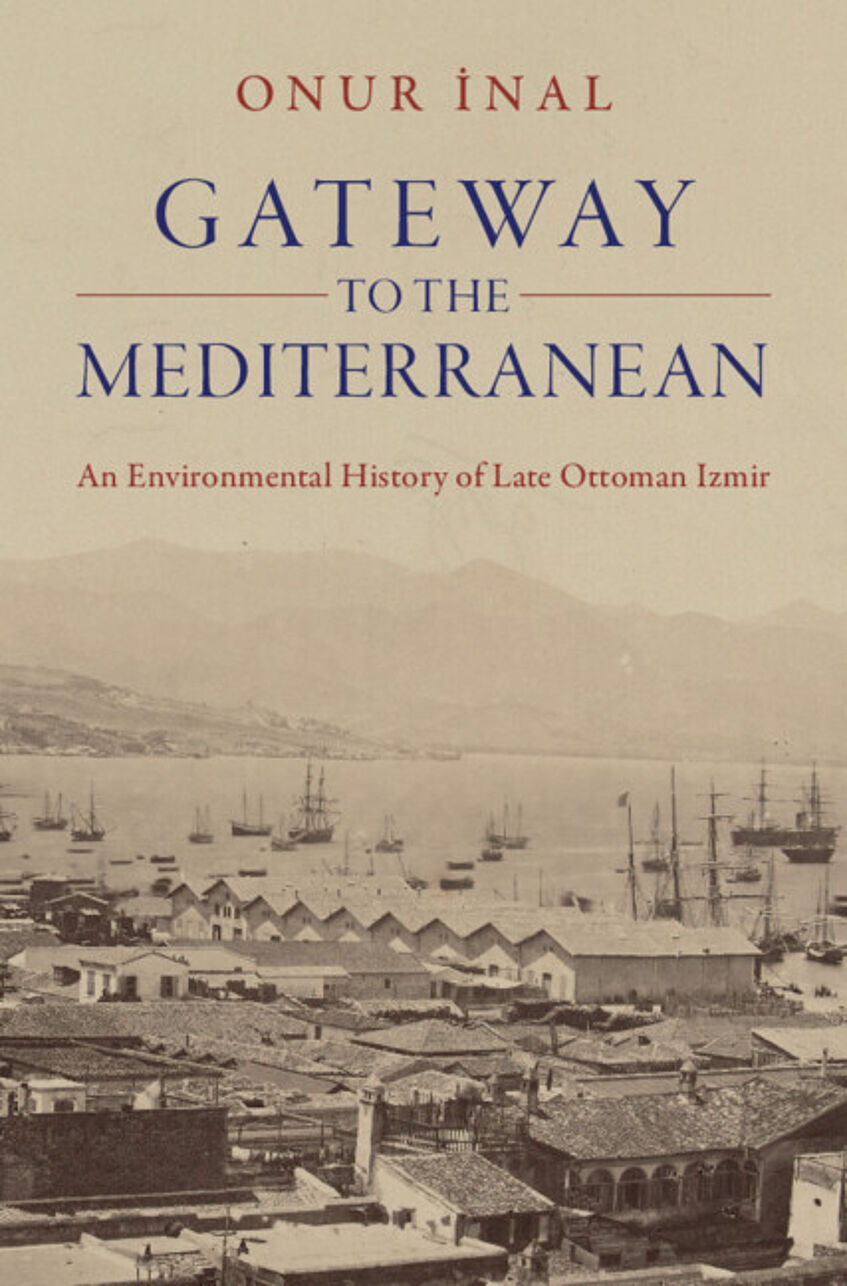
Gateway to the Mediterranean: An Environmental History of Late Ottoman Izmir
Onur İnal, 2025
Cambridge University Press
This in-depth exploration of Ottoman Izmir is the first book to study a Mediterranean port city through an environmental historical lens. Onur İnal documents the development of this major Eastern Mediterranean port-city from small coastal town, to transport hub, to a gateway linking the river valleys of Western Anatolia to worldwide markets. Key to this evolution, he argues, was the relationship between a city and countryside which not only shared a common past, but fundamentally reshaped each other during the years of the late Ottoman Empire. Introducing a cast of both human and non-human historical actors, including camels, horses and micro-organisms, İnal demonstrates the transformative impact of their interaction on the city and its hinterlands. By proposing the 'gateway city' model, this rich analysis provides an alternative way to understand the creation of an integrated economic and ecological space in Western Anatolia.
For more details: https://www.cambridge.org/core/books/gateway-to-the-mediterranean/3FD96AAFD010FE94C647D7430E638A40
Der Klang der Monarchie. Eine musikalische Geschichte des Habsburgerreichs

Der Klang der Monarchie. Eine musikalische Geschichte des Habsburgerreichs
Philipp Ther, 2025
Suhrkamp
Die multinationale k.u.k. Monarchie stieg seit dem späten 18. Jahrhundert im Konzert der Großmächte unaufhaltsam ab und stand intern vor tiefen Zerreißproben. Doch die Habsburger rappelten sich immer wieder auf, überstanden Napoleon, einen Staatsbankrott, die Revolution von 1848 sowie die Niederlagen gegen Italien und Preußen. Haydn, Mozart und Beethoven hielten das weite Reich ebenso zusammen wie seine Walzerkönige, Operettenfürsten und Militärkapellmeister. Der »Habsburg-Pop« erreichte die Massen und wurde zu einem globalen Exportartikel. Das Habsburgerreich hummte und summte, sang und tanzte, wirbelte und trommelte und ging erst unter, als seine musikalischen Mittel im Großen Krieg versagten.
Musik ist ein Motor der Geschichte, und Philipp Ther nutzt sie als historische Quelle. Der »sozialhistorische Prosakünstler« (Gustav Seibt) blickt auf das enge Verhältnis von Macht und Musik und zeigt, wie Walzer, Polka und die Vorläufer des Austro-Pop den Staat zusammenhielten. Die Habsburgermonarchie, so Ther in seinem beschwingten, berührenden und am Ende tragischen Buch, mag 1918 untergegangen sein, doch das Reich der Musik lebt weiter.
For more details: https://www.suhrkamp.de/buch/philipp-ther-der-klang-der-monarchie-t-9783518432464
Moskaus westliche Rivalen. Eine europäische Geschichte vom Nordkap bis zum Schwarzen Meer

Moskaus westliche Rivalen. Eine europäische Geschichte vom Nordkap bis zum Schwarzen Meer
Oliver Jens Schmitt, 2025
Klett-Cotta
Die große Geschichte der Nachbarn Russlands – vom Mittelalter bis zur Gegenwart neu erzählt
In einem großen zeitlichen Bogen vom Mittelalter bis heute zeichnet Oliver Schmitt die Geschichte und die Erfahrungen der Gesellschaften vom Nordkap bis zum Schwarzen Meer nach. Eindrucksvoll zeigt er, dass Moskau von seinen westlichen Nachbarn nicht primär durch Sprache oder Religion, sondern v.a. durch Unterschiede der politischen Kultur getrennt ist. Ein fesselndes Panorama der Geschichte der unmittelbaren Nachbarn Russlands, das historisch begründet, wie sie sich von Russland unterscheiden.
Warum greift Russland seine westlichen Nachbarn an? Was unterscheidet diese vom Moskauer Machtsystem? Europa wird oft über seine großen Mächte wahrgenommen, der russische Überfall auf die Ukraine hat jedoch eine neue politische Dynamik entfaltet: Der Norden, das Baltikum und Polen, unterstützen die Ukraine. Wie ist das zu erklären?
Oliver Schmitt legt die geschichtlichen Erfahrungen von Norwegern, Schweden, Finnen, Esten, Letten, Litauern, Polen, Belarusen, Ukrainern und Moldauern frei, die seit Jahrhunderten Nachbarn Moskaus sind. Die Geschichte dieser Regionen wurde bisher nie umfassend im Zusammenhang geschrieben. Dabei vertreten diese Länder gegenüber Moskau in ihrer politischen Kultur das, was Europa heute ausmacht: Parlamente, Wahlen, Rechtstaatlichkeit und friedliche Widerständigkeit. Zum ersten Mal erzählt ein Historiker die wenig bekannte Geschichte eines oft übersehenen, aber weitreichenden Teils Europas, dessen Unabhängigkeit heute erneut bedroht ist.
For more details: https://www.klett-cotta.de/produkt/oliver-jens-schmitt-moskaus-westliche-rivalen-9783608966183-t-9114
Becoming Ottoman: Converts, Renegades and Competing Loyalties in the Early Modern and Modern Ages

Becoming Ottoman: Converts, Renegades and Competing Loyalties in the Early Modern and Modern Ages
Yavuz Köse (Anthology Editor) , Petr Kucera (Anthology Editor) , Tobias Völker (Anthology Editor), 2025
I.B. Tauris
This book examines the role of Europeans who settled in the Ottoman Empire between the 16th and 19th centuries and assumed “Ottoman identity”, be it by way of conversion to Islam and assimilating to the host society or by becoming loyal servants or subjects of the Ottoman state, identifying themselves as Ottomans, but retaining their faith. Bringing together a variety of case studies that reflect a broad range of individual experiences in changing historical circumstances, the book provides a detailed study of the process of Ottomanization. The book draws upon a variety of archival and other sources such as travelogues, diaries and folk epics, including lesser known examples, from early-modern Czech, Venetian and Wallachian views of converts, to case studies of 19th century British, German and Austrians who switched loyalty. They show that this process depended on a range of factors, from conversion, to integration into the culture of the ruling elites, fluency in the language, affiliation through family ties or marriage, and, most importantly, social status and professional rank.
For more details: https://www.bloomsbury.com/us/becoming-ottoman-9780755640997/
Twelve Years Away from Constantinople (1896 - 1908)

Twelve Years Away from Constantinople (1896 - 1908)
Yervant Odian, introduction and English translation by Nanor Kebranian, 2025
Gomidas Institute
Twelve Years Away from Constantinople was an instant classic in its time. For well over a century, it has endured as a uniquely candid and entertaining account of Armenian émigré life during the reign of the authoritarian Ottoman sultan, Abdülhamid II. Best known for his trenchant satires, its extraordinarily cosmopolitan author, Yervant Odian, was and remains one of the most recognizable and active figures of his generation. His multifaceted international career as journalist and civil society leader embedded him deeply in Ottoman-Armenian intellectual and revolutionary circles both in Constantinople and well beyond. This remarkably unabashed memoir relates his observations as a well-loved and committed member of those inner circles. His twelve-year journey begins with the 1896 massacre of Armenians in the Ottoman capital, when Odian, like many of his contemporaries fled as a political refugee to safer shores. His migrations led him to Greece, Egypt, France, Austria, and England, where he witnessed and withstood the numerous hardships plaguing the Armenians of the ‘senior diaspora.’ With Nanor Kebranian’s masterful rendering and probing introduction, this work is now available for the first in English translation.
Lehrbuch des Osmanischen

Lehrbuch des Osmanischen
Gisela Procházka-Eisl, 2025
V&R unipress
Die Studiengrammatik bietet eine praxisnahe Einführung in osmanische Originaltexte. Ziel ist es, Texte mittlerer Schwierigkeitsstufe nicht nur zu verstehen, sondern sie auch philologisch präzise zu transkribieren und ins Deutsche zu übersetzen. Der Zugang erfolgt ausschließlich über Originaltexte aus verschiedenen Genres, die nach steigendem Schwierigkeitsgrad ausgewählt wurden. Von Volksliedern und Heiratsanzeigen des frühen 20. Jahrhunderts über Zeitungsartikel und Gedichte bis hin zu magischen Texten des 16. und Chroniken des 15. Jahrhunderts eröffnet das Lehrwerk einen faszinierenden Einblick in die Vielfalt der osmanischen Schriftkultur.
Զապէլ Եսայեան՝ Սեմին Վրայ - Բանալի Գրութիւններ Օսմանահպատակ Հայ եւ Թուրք Կեանքէ

Զապէլ Եսայեան՝ Սեմին Վրայ - Բանալի Գրութիւններ Օսմանահպատակ Հայ եւ Թուրք Կեանքէ
Zabel Yessayan (1878 - 1943), ed. Nanor Kebranian, 2025
Gomidas Institute
This is a companion to the English translations that appeared as Zabel Yessayan on the Threshold: Key Texts on Armenians and Turks as Ottoman Subjects (Gomidas, 2023) and Captive Nights: From the Bosphorus to Gallipoli with Zabel Yessayan (The Press at CSU, 2021). Published between 1899 and 1927 and including three previously unknown and uncatalogued texts, these marginalized and/or under-appreciated works (both fiction and non-fiction) highlight Yessayan's groundbreaking insights on Muslim/Turkish women's rights and Armeno-Turkish solidarity.
For more details: https://gomidas.org/books/show/176
Ottoman Niš: Territorialisation and Urban Space in the Eighteenth- and Nineteenth-Century Balkans

Ottoman Niš: Territorialisation and Urban Space in the Eighteenth- and Nineteenth-Century Balkans
Florian Riedler, 2025
Schriften zur Balkanforschung 6, Austrian Academy of Sciences Press
Die Stadt Niš, die heute zu Serbien gehört, war etwa ein halbes Jahrtausend lang Teil des Osmanischen Reiches. Diese Studie legt die erste eingehende Untersuchung der Geschichte der Stadt während der letzten Phase der osmanischen Herrschaft von 1700 bis 1878 vor. Sie zeichnet die Entwicklung einer Stadt nach, die wegen ihrer Lage an einer der Hauptrouten durch den Balkan Durchgangsstation für Reisende und Händler war. Dank der im 18. Jahrhundert errichteten Festung wurde Niš zu einem wichtigen militärischen Stützpunkt in der Nähe der neuen Grenze zur Habsburgermonarchie. Im 19. Jahrhundert wurde die Stadt im Rahmen der osmanischen Modernisierungspolitik zu einem Vorzeigeprojekt der Stadterneuerung. Unter Rückgriff auf ein breites Spektrum von Quellen, darunter Stadtpläne und Bevölkerungsregister, wird das Wachstum von Niš und seiner städtischen Bevölkerung rekonstruiert. Der Schwerpunkt liegt dabei auf der Entwicklung des städtischen Raums, den die Studie als multiple, sich überlappende Territorien zu verstehen sucht. Besondere Aufmerksamkeit wird der Entwicklung des städtischen Lebens gewidmet, das von unterschiedlichen religiösen und ethnischen Gemeinschaften geprägt war. Die Studie zeichnet die Strategien der osmanischen Behörden und der lokalen Eliten zur Steuerung dieser vielfältigen Bevölkerung in verschiedenen Phasen der Stadtgeschichte nach. Insgesamt stellt sich Niš als eine typische osmanische Stadt dar, deren Entwicklung in umfassendere politische, wirtschaftliche und soziale Trends auf dem osmanischen Balkan eingebettet war.
For more details: https://verlag.oeaw.ac.at/produkt/ottoman-ni/99200983?name=ottoman-ni&product_form=5717
2024
Ottoman Plovdiv: Space, Architecture, and Population (14th‒17th Centuries)
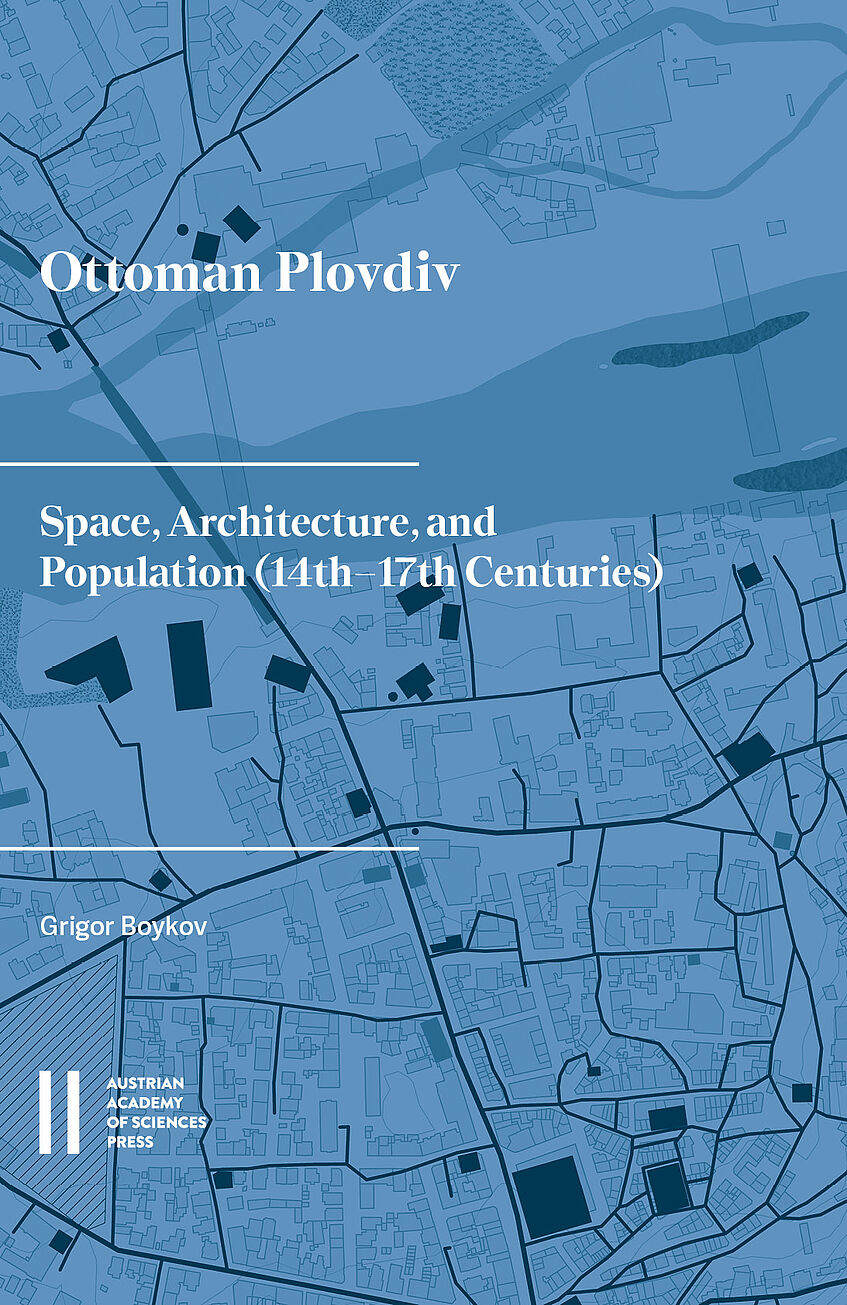
Ottoman Plovdiv: Space, Architecture, and Population (14th‒17th Centuries)
Grigor Boykov, 2024
Schriften zur Balkanforschung, 5, Austrian Academy of Sciences Press
The significance of studying urban life and cities in the Balkans under Ottoman rule has long been recognized by modern academia, yet a comprehensive analysis of individual cities remains scarce. This monograph endeavors to bridge this gap by delving into the rich history of Plovdiv (known as Filibe in the Ottoman era), modern Bulgaria’s second-largest city. Drawing from the latest advancements in urban geo-humanities, this study positions Plovdiv as a window into the diverse human activities occurring within its built environment during the formative centuries of Ottoman governance. Moving beyond the constraints of conventional historical approaches, the monograph integrates spatial, architectural, and population data into a cohesive, georeferenced digital model of the city, allowing for a detailed exploration of urban landscape transformations and human presence over time and space. The study is grounded in a wealth of underexplored primary sources, including historical city plans, Ottoman architectural landmarks, visual materials, and a diverse array of Ottoman documentary and narrative sources. Through this rich tapestry of materials, the author conducts a diachronic analysis of the development of urban fabric, shedding light on the pivotal role of architectural landmarks and their patrons, and examining the fluctuations in population density across time and space. The book fosters a dialogue between urban space, Islamic architecture, and the city’s residents and proposes an analytical geospatial model that can serve as a useful framework for studying other cities in the region that lack contemporary Ottoman cadastral data.